
Do Hair Extensions Damage Your Hair? What You Need to Know
By Studio 303
Published November 1, 2026
Est. Reading Time:
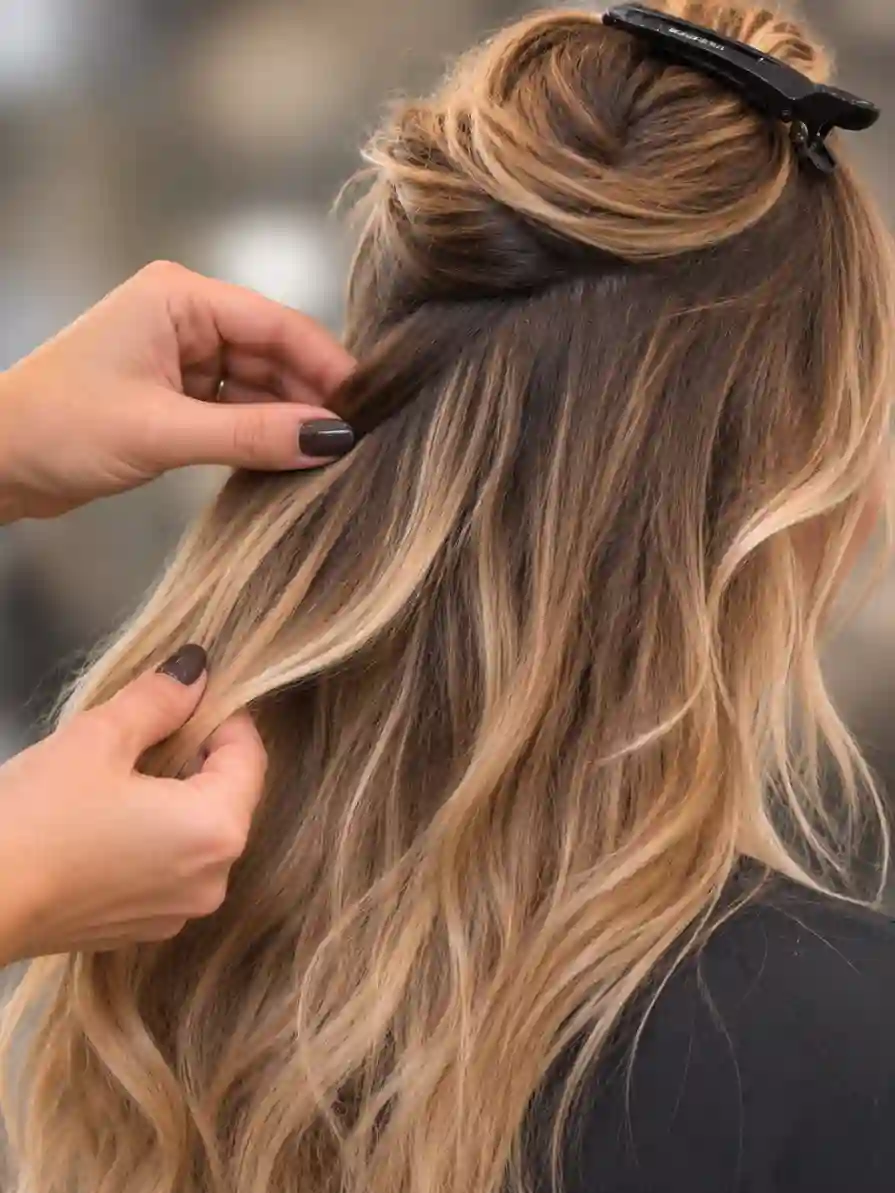
Hair extensions do not automatically damage your natural hair. When the right extension method and amount of hair are selected for your natural hair, then professionally installed, maintained, and removed, extensions can be worn without unnecessary stress on the hair.
But extensions can contribute to breakage, thinning, or other damage when they are too heavy or tight, installed on hair that cannot comfortably support them, allowed to mat or tangle, poorly maintained, or removed incorrectly.
That is why the better question is not simply, “Do hair extensions cause damage?” It is, “Are these extensions appropriate for my hair, and are they being installed and cared for in a way that minimizes unnecessary stress?”
What Actually Causes Hair Extension Damage?
Most extension-related damage comes down to stress on the natural hair, particularly tension, weight, tangling, poor installation, or improper removal.
The extension method matters, but it is only part of the equation. Your natural hair’s density, condition, and strength matter too. An installation that works beautifully for one person may put too much stress on someone else’s hair.
Too Much Tension
Extensions should not require you to tolerate significant pulling or persistent discomfort.
Repeated tension on the hair can cause breakage and, in more serious cases, contribute to traction alopecia, a form of hair loss associated with repeated pulling on the hair.
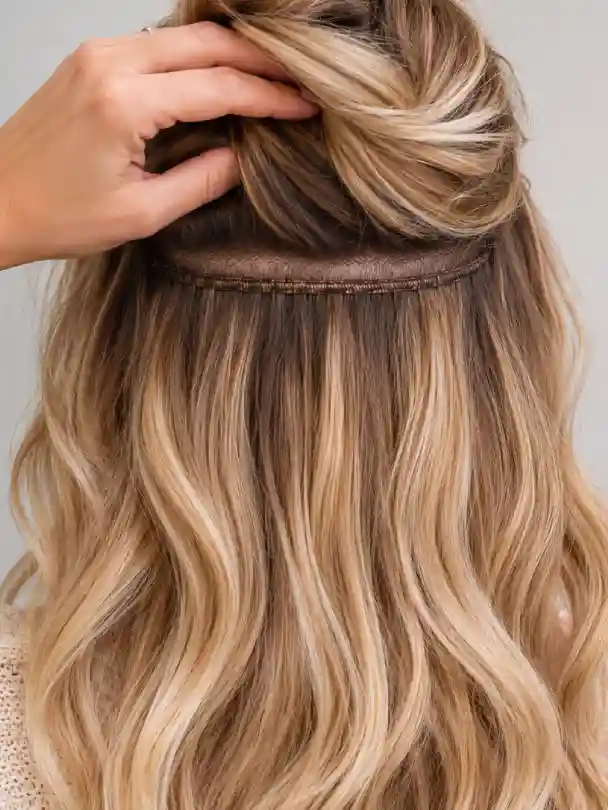
Pay particular attention to persistent pain, stinging, tenderness, or visible pulling around attachment points. Those are not symptoms to simply ignore until your next appointment.
Too Much Weight for the Natural Hair
More extension hair is not always better.
Your natural hair has to support the weight attached to it. If too much extension hair is attached to hair that is fine, low-density, fragile, or already compromised, the additional weight may create unnecessary stress.
This is one reason extension candidacy should be evaluated individually rather than choosing a method or amount of hair based solely on the finished look you want.
Choosing a Method That Does Not Suit the Hair
There is no single extension method that is automatically the “least damaging” for everyone.
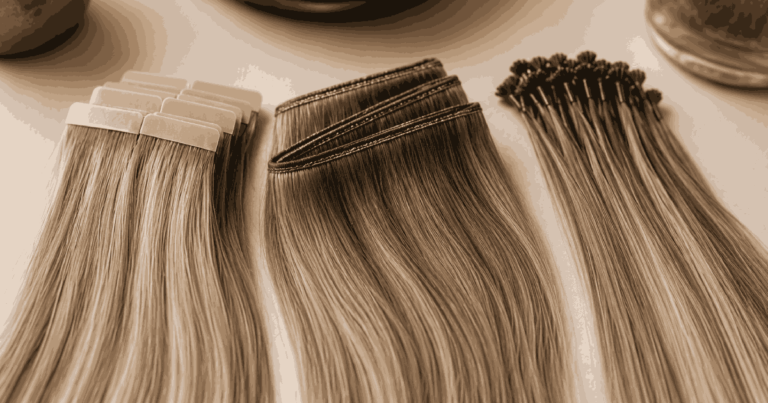
Studio 303 offers tape-in, weft, K-tip, and I-tip extensions, and each attaches to the natural hair differently. The appropriate choice depends on the individual wearing them, including the condition and density of the natural hair and the desired result.
If you are primarily trying to understand how the methods differ, our guide to tape-in, weft, and K-tip extensions explains those differences in more detail. This article is focused specifically on damage and risk rather than ranking extension methods.
Improper Installation
Even a method that is appropriate for your hair can cause problems if it is installed incorrectly.
Attachments that create excessive tension, too much extension weight supported by too little natural hair, or placement that puts unnecessary stress on vulnerable areas can increase the chance of breakage.
A professional extension service should therefore begin before the actual installation. Determining whether the natural hair can support the desired result is part of choosing extensions responsibly.
Matting and Tangling Near the Attachments
Natural hair continues to shed while you are wearing extensions. Some of those shed hairs can remain trapped around attachment points until the extensions are maintained or removed.
If the area is not cared for properly, tangling can progress into matting. Trying to pull or brush through significant matting can then place additional stress on the natural hair and make eventual removal more difficult.
Improper or DIY Removal
Removal is part of the extension service, not an afterthought.
Different extension methods require different removal techniques. Pulling, peeling, cutting, forcing, or otherwise trying to remove professional extensions without knowing exactly what you are doing can cause avoidable breakage.
If extensions are difficult to remove, more force is not the answer. Have them professionally assessed and removed instead.
How Can You Tell if Hair Extensions Are Damaging Your Hair?
Some of the most useful warning signs are things you can feel or see.
Watch for:
- Persistent pain, pulling, stinging, or tenderness around attachment points
- A feeling that the extensions are excessively tight or heavy
- Short broken hairs concentrated around attachment areas
- New thinning around the hairline, temples, part, or extension placement
- Significant matting or tangling near the roots or attachments
- Areas of the scalp that appear to be under visible tension
Do not assume that discomfort is simply part of having extensions.
If something feels wrong, contact your extension stylist rather than waiting for the problem to become more noticeable.
Hair loss can also have many causes unrelated to extensions. If you notice unexplained or continuing thinning, scalp symptoms, or hair loss, a dermatologist can determine whether something other than your extensions may be involved.
Can Hair Extensions Cause Breakage or Hair Loss?
Yes. Extensions can contribute to breakage when the natural hair is subjected to more tension, weight, friction, or pulling than it can tolerate.
Short snapped hairs concentrated around attachment points can indicate breakage and are worth having assessed by your stylist.
Extensions can also contribute to hair loss when they repeatedly create excessive pulling on the natural hair. One concern associated with repeated tension is traction alopecia. The American Academy of Dermatology identifies tight hair extensions and weaves among hairstyles that can cause traction alopecia because of repeated pulling.
Warning signs can include pain or stinging, broken hairs, a receding hairline, or areas of hair loss where the hair is repeatedly pulled.
That does not mean everyone who wears extensions will develop traction alopecia. It does mean that persistent pulling should be taken seriously rather than treated as an unavoidable part of wearing extensions.
What About Hair Extensions for Fine or Thin Hair?
Having fine or thin hair does not automatically rule out extensions, but it makes proper assessment especially important.
Fine hair refers to the diameter of individual strands, while thin or low-density hair refers to how much hair is present. Either can affect how much extension weight the natural hair can comfortably support and how easily attachment points can be concealed.
The goal should not be to attach as much hair as possible. It should be to determine whether extensions are appropriate for the natural hair and, if they are, choose an approach that does not unnecessarily overload it.
Hair that is already fragile, significantly compromised, or actively thinning deserves additional caution.
For the purposes of preventing damage, the important point is that extension selection should be based on the hair you actually have, not simply the length or volume you want to add.
When Might Someone Not Be a Good Candidate for Hair Extensions?
Not everyone should necessarily get extensions immediately.
Hair that is significantly weakened, breaking, or otherwise compromised may not be in the best condition to carry additional weight. Unexplained thinning or hair loss should also be evaluated rather than simply covered with extensions.
The underlying cause matters.
A stylist can evaluate whether the hair appears suitable for an extension service, but unexplained hair loss or scalp concerns may require evaluation by a dermatologist or another appropriate healthcare professional.
Sometimes the responsible recommendation may be to change the extension plan, add less hair, consider another approach, or postpone extensions altogether.
How We Assess Extension Candidacy at Studio 303
At Studio 303, we don’t assume that every extension method, or every desired amount of length and volume, is appropriate for every client.
Your natural hair matters. Its condition, density, and ability to support the added hair all need to be considered before deciding whether extensions are a good option and which approach makes sense.
That’s exactly what the consultation is for.
Rather than asking you to figure out which extension method you need before you walk through the door, we look at your natural hair, talk about the result you’re hoping to achieve, and determine whether extensions are appropriate for you.
Sometimes that may mean adjusting the original plan. Extensions should work with the hair you have, not ask your natural hair to support more than it reasonably can.
At our salon on South Broadway in Englewood, Colorado, we offer tape-in, weft, K-tip, and I-tip extensions. You can learn more about the options on our Hair Extensions service page and schedule a consultation to find out what makes sense for your hair.
How Can You Reduce the Risk of Hair Extension Damage?
There is no way to promise that any extension method is completely risk-free, but several factors can reduce avoidable stress on the natural hair:
- Start with a professional consultation rather than choosing an extension method based only on the finished look.
- Make sure the amount and weight of added hair are appropriate for your natural hair.
- Speak up if an installation feels painfully tight or continues to cause discomfort.
- Follow the care instructions for your particular extension method.
- Address tangling or matting before it becomes severe.
- Keep up with the maintenance recommended for your installation.
- Have extensions professionally removed rather than pulling, cutting, or forcing them out yourself.
- Pay attention to changes in your natural hair, particularly breakage or thinning around attachment areas.
The American Academy of Dermatology recommends having extensions and weaves professionally installed and advises speaking up if an installation causes pain or feels too tight. Repeated pulling can contribute to traction alopecia, so persistent discomfort should not simply be accepted as part of wearing extensions.
If you are new to extensions and want a broader overview of the available methods, cost, maintenance, and what to expect, our Hair Extensions in Englewood, CO: Types, Cost & What to Expect guide covers those basics in more detail.
Does Proper Extension Care Matter?
Yes. Installation is only one part of protecting your natural hair.
Tangling, matting, product buildup, pulling on attachment points, and delaying needed maintenance can all create additional stress after you leave the salon. Good home care helps keep the extension hair manageable while reducing unnecessary pulling on the natural hair underneath.
Washing is part of that care, but the appropriate routine depends on your extension method, scalp, and other factors. For detailed guidance, see How Often Should You Wash Hair Extensions?
The important point for damage prevention is to keep the scalp and attachment areas properly cared for without aggressively scrubbing, pulling, or allowing significant matting to develop.
Does Removing Hair Extensions Damage Your Hair?
Professional extension removal should be performed according to the attachment method. Damage is more likely when extensions are pulled, peeled, cut out, or otherwise forced from the natural hair.
It is also important not to confuse every hair you see during removal with extension damage.
Hair naturally sheds as part of its normal growth cycle. When extensions are attached, some naturally shed strands may remain trapped within the installation instead of falling away. When the extensions are removed, those accumulated shed hairs can suddenly become visible.
That can look alarming, but the amount of visible hair alone does not establish that the extensions caused breakage or hair loss.
Short broken hairs, localized thinning, or other changes around the attachment areas are different and deserve attention.
Can Hair Recover After Extension Damage?
It depends on what caused the damage and how severe it is.
Hair-shaft breakage and hair loss from the root are not the same thing, and there are many possible causes of thinning or hair loss besides extensions. That makes it difficult to determine the cause simply by looking at how much hair is coming out.
Traction alopecia can become permanent if the pulling continues, which is why early signs of tension or hair loss should not be ignored.
If you are seeing continuing thinning, bald areas, scalp irritation, or significant unexplained hair loss, that moves beyond an extension-care question. A dermatologist can evaluate what is happening and determine whether another condition may be involved.
The Bottom Line: Extensions Should Work With Your Natural Hair
Hair extensions do not automatically equal damaged hair, but they are not completely risk-free either.
The condition and density of your natural hair, the amount of added hair, the extension method, installation, maintenance, and removal all matter.
That is why choosing extensions should begin with your natural hair rather than with a particular method you saw online.
At Studio 303 on South Broadway in Englewood, Colorado, we offer tape-in, weft, K-tip, and I-tip extensions. If you are considering extensions, visit our Hair Extensions service page and book a consultation so we can talk through your natural hair, your goals, and the extension options available to you.
Frequently Asked Questions
Do hair extensions damage your natural hair?
Hair extensions do not automatically damage natural hair, but they can contribute to breakage or hair loss when there is excessive tension or weight, poor installation, significant matting, inappropriate maintenance, or improper removal. The condition of the natural hair and whether the installation is appropriate for it also matter.
Which type of hair extension is least damaging?
There is no single extension method that is least damaging for everyone. Tape-in, weft, K-tip, and I-tip extensions attach differently, and the appropriate choice depends on factors including the condition, density, and strength of the natural hair. Professional assessment is more useful than choosing a method based solely on a general ranking.
Can hair extensions cause hair breakage?
Yes. Extensions can contribute to breakage if the natural hair is subjected to excessive weight, tension, pulling, tangling, or improper removal. Short broken hairs concentrated near attachment areas may be a reason to have the installation assessed.
How can you tell if extensions are damaging your hair?
Persistent pain, pulling, tenderness, broken hairs around attachment points, new localized thinning, significant matting, or visible tension can be warning signs. If extensions hurt or feel excessively tight, contact your stylist rather than waiting for your next scheduled appointment.
Can you get hair extensions if you have fine or thin hair?
Possibly. Fine or low-density hair does not automatically rule out extensions, but the natural hair needs to be assessed carefully because it may support less weight or require a different approach. Hair that is fragile, significantly compromised, or actively thinning may not be a good candidate.
Can hair recover after extension damage?
That depends on the type and severity of the damage. Hair-shaft breakage differs from hair loss caused by ongoing tension. Traction alopecia can become permanent if the pulling continues, so significant or unexplained hair loss should be evaluated by a dermatologist.
Does removing extensions damage your hair?
Proper professional removal is intended to separate the extensions without unnecessarily pulling or forcing the natural hair. Trying to peel, pull, cut, or otherwise remove professional extensions yourself can increase the risk of breakage. Some naturally shed hair may also become visible during removal because it was trapped within the installation.